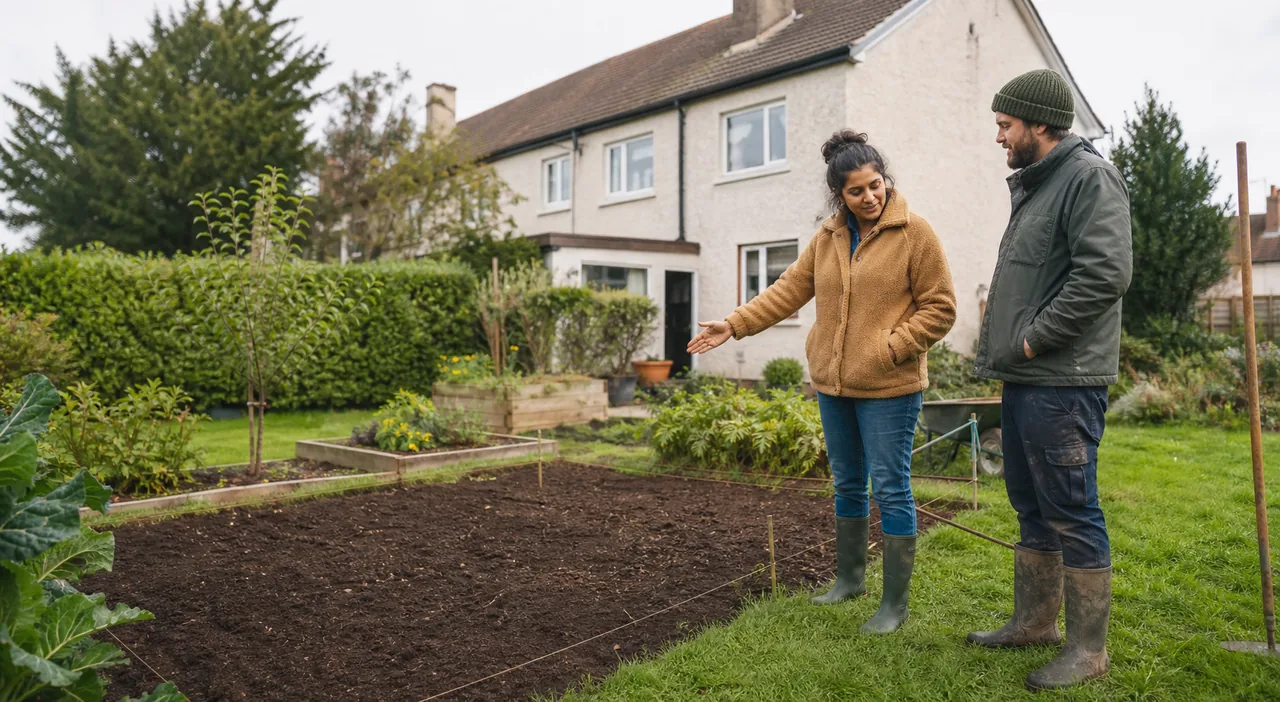
Why city and suburban gardens matter most
A plot is only useful if the grower can reach it often. Vegetables need short, regular visits for watering, weeding and harvesting. A modest garden plot within walking, cycling or bus distance may therefore be more valuable in practice than a much larger rural space.
You do not need to give over your entire garden. A defined corner can work where it has reasonable light, a practical access route and a clear boundary from the host's private area.
First: is your space suitable?
Walk through these questions before listing:
- Light: does the area receive enough direct light during the growing season?
- Access: can a grower reach it without walking through private rooms? Is there a side gate or agreed route?
- Water: is there an outdoor tap, rainwater storage or another agreed source?
- Boundary: can both parties clearly identify the permitted plot and excluded areas?
- Ground: is the soil suitable, or would containers or raised beds be more appropriate?
- Hazards: consider uneven paths, steps, ponds, wells, glass, machinery, animals, chemicals and overhead or underground services.
- Privacy: are you comfortable with one named adult visiting at agreed times?
- Practicality: where will tools, compost, waste and harvested produce go?
If the site was previously used for dumping, industry, treated timber storage or another potentially contaminating activity, do not describe it as suitable for food growing without appropriate investigation.
Use a licence, not an informal promise
The intended arrangement is a personal permission to use a defined part of a larger property—not possession of the property. The Residential Tenancies Board's explanation of licences identifies useful characteristics: no exclusive possession, continuing owner access, personal non-transferable rights and no legal interest in the property. A growing plot is not a dwelling, but the same practical distinction is useful.
The written agreement should reflect what actually happens. Simply putting “licence” at the top is not enough if the grower is given exclusive control in practice.
Include these points
- the host and grower's names and confirmation that both are adults;
- the host's ownership or authority to offer the space;
- a photograph or plan marking the permitted area and access route;
- the start and end date, renewal method and reasonable notice;
- agreed access days and hours;
- permitted growing activities and prohibited uses;
- rules for guests, children and pets;
- water, tools, storage, compost and waste arrangements;
- structures and chemicals that require advance permission;
- the plot-use fee or produce arrangement, if any, paid directly between the parties;
- maintenance, incident reporting and what happens to crops and improvements when it ends;
- a statement that the permission is personal, non-exclusive and non-transferable and that the host retains access and control.
Insurance: the answer depends on your policy
Do not assume ordinary visitor cover automatically includes repeated access connected with a paid plot. Allianz, for example, says visitors attending for business purposes are not covered on its standard home policy. Other insurers and policies may use different wording. See Allianz's current liability FAQ.
Which kind of cover might apply?
- Existing home insurance: ask the insurer to confirm whether the exact unpaid or paid arrangement remains covered.
- Farm insurance: a farm host should disclose the plot use and access route and ask whether the farm public-liability section extends to it.
- Land or property-owner liability: a broker may propose this where home cover excludes the activity or the land is separate from the home. Irish land-liability products exist for private landowners, but acceptance and wording are quote-specific.
- Organisation or school land: the organisation should follow its own governance and insurer requirements. Some insurers expect outside users to carry their own public-liability cover and sign a licence.
What might it cost?
There is no reliable published Irish “garden plot host” premium. The honest outcomes are: the current insurer may confirm cover without a change, may add terms or premium, may exclude it, or may direct the host to separate land/property-owner cover. Specialist Irish land-liability providers advertise quote-based cover rather than a standard price, and generic public-liability advertisements should not be treated as plot-host evidence.
Useful starting points include LandLiability.ie and Dolmen's land-liability product information. Homegrown has no relationship with these firms and does not recommend a policy.
Use this insurer or broker script
I own or control this property and want to give one named adult a personal, seasonal, non-exclusive licence to use approximately [size] of my [garden/field] for growing vegetables. They will visit about [frequency] using [access route]. They may use [water/tools/storage]. They will pay [nothing/€ amount/provide produce]. I retain access and control. Does my policy cover my legal liability for this exact activity? Are there exclusions, conditions, an additional premium or another policy you recommend? Please confirm the answer in writing.
Tell the broker about ponds, wells, machinery, livestock, chemicals, structures, children, guests and any business or produce-selling activity. A vague “is my garden covered?” question is not enough.
Liability and safety
A permitted grower will generally be a visitor. The host remains the person controlling the property and should take reasonable care, disclose known hazards and keep the agreed access route and plot reasonably maintained. Written terms and an informed risk acknowledgement help clarify expectations but do not erase the occupier's statutory duties. Read the Occupiers' Liability Act 1995.
Homegrown's checks are not a safety certificate. Before agreeing, host and grower should walk the site together, photograph its condition and record hazards and boundaries.
Planning and structures
Growing vegetables in an existing domestic garden may be consistent with its current use, but Homegrown cannot give a universal planning answer. The legal definition of development includes works and a material change in the use of land. Multiple plots, new parking or access, sheds, polytunnels, signage, retail activity or increased traffic can change the analysis.
If the proposal goes beyond one small low-intensity plot—or the existing authorised use is unclear—ask the local planning authority or obtain professional advice. See section 3 of the Planning and Development Act 2000.
Tax: declare money and do not ignore produce
Rent-a-Room Relief is for qualifying residential accommodation inside a home; it should not be assumed to cover a garden plot. Revenue says Irish rental income can include farmland, conacre and payments for other property rights. Individuals must declare taxable rental income using the appropriate return. If net rental income is under €5,000, Revenue currently directs individuals to myAccount; above €5,000 generally requires self-assessment and Form 11.
Produce or another non-cash benefit is not automatically tax-free. Revenue recognises that produce or goods can form consideration for a lease and that payments in kind can have a market value. Record what was agreed and ask Revenue or a tax adviser if treatment is uncertain.
Sources: Revenue on Irish rental income, how to declare it, and non-cash consideration.
A sensible first listing
- Start with one named adult grower and one clearly marked plot.
- Offer a fixed season rather than an indefinite arrangement.
- Keep the exact address private until both sides choose to meet.
- Walk the plot together and record its condition and hazards.
- Get the insurer or broker's answer before access begins.
- Sign the direct seasonal licence and keep a copy each.
- Review the arrangement after the first month and at season end.
Have a useful garden corner near where people live?
Tell us the approximate area, size, access and facilities. It is free to list, and your exact address is not published.
List your growing space